Why Radiation Risk Is Increasing Globally
- TIM T
- May 21
- 1 min read


Around the world, concerns about radiation exposure and nuclear safety are increasing. Rising geopolitical tensions, nuclear infrastructure concerns, radioactive material incidents, and global instability have caused many people to rethink emergency preparedness and long-term safety planning.
Modern society is highly interconnected. Large cities, transportation systems, industrial infrastructure, and global supply chains mean that the effects of a nuclear or radiological event could extend far beyond one location. Radioactive fallout can travel long distances through the atmosphere, affecting air, water, surfaces, and public infrastructure.
Several factors are contributing to growing global radiation concerns:
Geopolitical conflicts and nuclear tensions
Concerns surrounding nuclear power facilities
Accidental radioactive material releases
Increased public awareness of emergency preparedness
Urban population density and infrastructure vulnerability
One of the biggest challenges with radiation exposure is that contamination is often invisible. Radioactive particles cannot usually be seen, smelled, or felt, yet they may still pose serious health risks through inhalation, ingestion, or environmental contamination.
Preparedness has become increasingly important for individuals, families, and organizations. Key preparedness measures may include:
Emergency planning
Indoor shelter preparation
Air filtration awareness
Protective equipment readiness
Understanding contamination risks
Following official emergency guidance
Preparedness is not about fear — it is about reducing risk and improving safety awareness during uncertain situations.
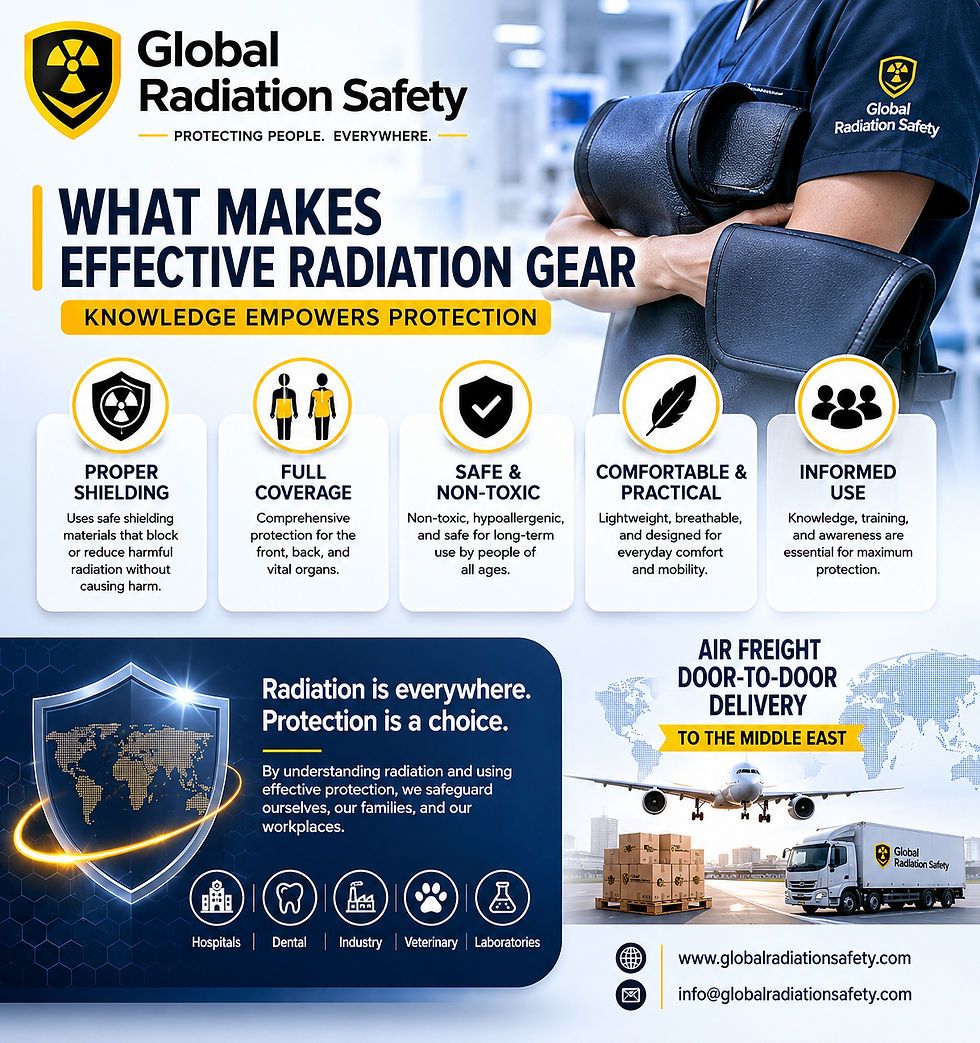
Global Radiation Safety provides advanced radiation protection solutions and preparedness equipment designed for high-risk environments and emergency preparedness.