What People Get Wrong About Nuclear Safety
- TIM T
- May 16
- 1 min read


One of the most common myths is believing that distance alone guarantees safety. In reality, radioactive fallout particles can travel hundreds or even thousands of kilometers through wind and atmospheric movement. Even areas far from the original nuclear event may still face contamination risks.
Another major misconception is that ordinary masks or regular clothing provide enough protection. Standard clothing does not stop radioactive particles from settling on the body, and low-grade masks may not effectively filter hazardous airborne contamination. Proper respiratory protection and contamination control are critical during high-risk situations.
Many people also believe radioactive fallout disappears quickly. However, radioactive particles can remain on surfaces, clothing, water supplies, vehicles, and buildings for days, weeks, or even longer depending on environmental conditions.
Radiation is especially dangerous because it is invisible. You cannot see, smell, or feel radioactive contamination, yet exposure can still affect the human body through inhalation, ingestion, or direct contamination.
Preparedness is one of the most important parts of nuclear safety. This includes:
Sealing indoor environments
Improving air filtration
Using proper respiratory protection
Avoiding contaminated surfaces
Staying informed during emergencies
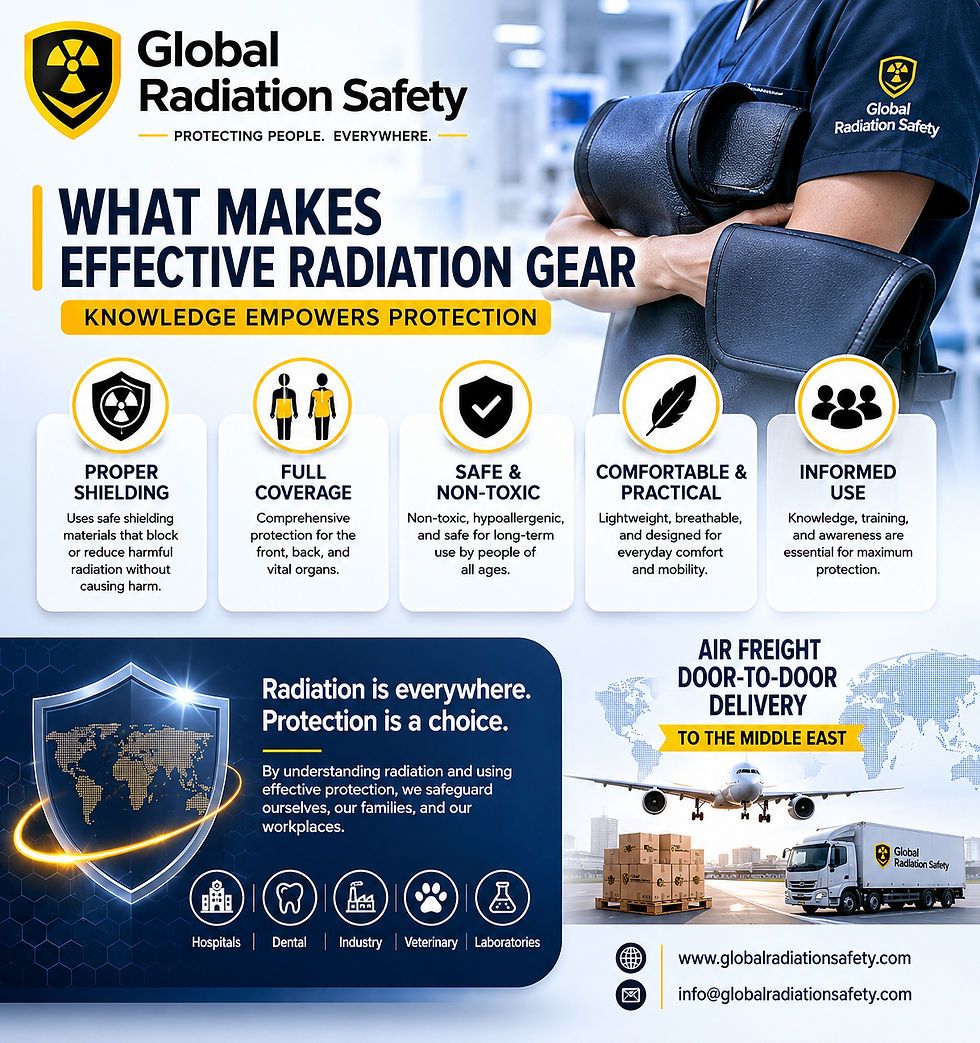
Global Radiation Safety provides advanced radiation protection solutions and preparedness equipment designed for high-risk environments and nuclear emergency preparedness.